How Wide Is a 55 Inch TV? Size Chart & Dimensions
Introduction
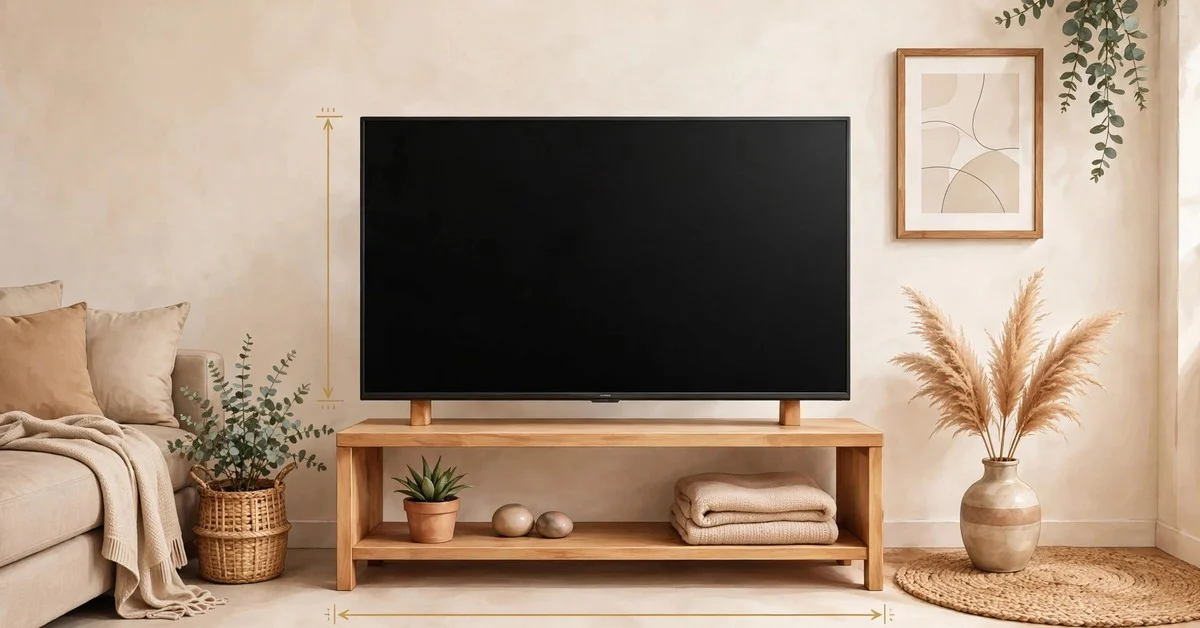
Shopping for a TV gets confusing fast, because the number on the box is not the width. A 55-inch TV screen is about 48 inches wide and 27 inches tall — the 55 inches is the diagonal, measured corner to corner. That makes the screen roughly 4 feet wide, or 121.7 cm by 68.6 cm in metric.
Those two numbers matter the moment you pick a TV stand, measure a wall, or check whether the box fits in your car. A stand that is 48 inches wide will hold the screen with almost no room to spare, and the feet of the TV may sit wider or narrower than the screen itself. This guide gives you the exact 55 inch TV dimensions, a full size chart for the most common models from 32 to 85 inches, 15 everyday objects that match the width, and simple ways to picture the size before you buy.
Conversion Chart
TV sizes are always given as the diagonal of a 16:9 screen. Width is the diagonal times 0.8716 and height is the diagonal times 0.4903. Here is what that works out to for the sizes you will see in stores.
| TV Size (diagonal) | Screen Width | Screen Height | Width (cm) | Height (cm) |
|---|---|---|---|---|
| 32 in | 27.9 in | 15.7 in | 70.9 cm | 39.9 cm |
| 43 in | 37.5 in | 21.1 in | 95.2 cm | 53.6 cm |
| 50 in | 43.6 in | 24.5 in | 110.7 cm | 62.2 cm |
| 55 in | 47.9 in | 27.0 in | 121.7 cm | 68.6 cm |
| 65 in | 56.7 in | 31.9 in | 144.0 cm | 81.0 cm |
| 75 in | 65.4 in | 36.8 in | 166.1 cm | 93.5 cm |
| 85 in | 74.1 in | 41.7 in | 188.2 cm | 105.9 cm |
Keep in mind that the full TV cabinet runs a little larger than the screen, usually by half an inch to an inch on each side for the bezel, plus a few inches of depth. The numbers above are the picture area itself.
Common Objects About as Wide as a 55-Inch TV
| Object | Approximate Width |
|---|---|
| Four-foot spirit level | 48 in (exact) |
| 4×8 plywood sheet | 48 in wide (exact) |
| T8 fluorescent tube | 48 in long (exact) |
| Standard wood pallet | 48 in on the long side |
| Loveseat | 48–60 in wide |
| Standard office desk | ≈ 48 in wide |
| Golf driver | 45–46 in long |
| Small park bench | ≈ 48 in long |
More Everyday Items Around 48 Inches
| Object | Approximate Size |
|---|---|
| Average 8-year-old’s height | 48–50 in tall |
| 48-inch ceiling fan | 48 in blade span |
| Standard bathtub | 60 in long (TV is shorter) |
| Twin bed | 38–39 in wide (TV is wider) |
| Interior door | 36 in wide (TV is wider) |
| Snowboard | 55–62 in long |
| Four-drawer file cabinet | ≈ 52 in tall |
How Wide Is a 55 Inch TV, Really?
Four feet is the number to remember. At 47.9 inches wide, a 55-inch TV screen lands just a hair under the 4-foot mark, which is why so many TV stands are sold in 48-inch widths. The height of 27 inches is a little more than 2 feet, so the screen has the rough proportions of a wide, short window.
For a slightly smaller reference, picture a standard interior door at 36 inches wide — the TV screen stretches a full foot beyond it on the width. For a slightly larger one, think of a standard bathtub at 60 inches long — the TV would fit inside it with about a foot to spare. Most living rooms handle this size well, which is exactly why the 55-inch class sells more than any other.
Easy ways to picture 48 inches in everyday life:
- Grab a tape measure and pull it to the 48-inch mark, then hold it against your wall — that span is your screen width. If you want a refresher on reading the markings, see how to read a measuring tape.
- Stand in a doorway. A standard interior door is 36 inches wide, so add one foot (about the length of a ruler) to picture the TV.
- Look at your desk. A typical office desk is about 48 inches wide, nearly a one-to-one match.
- Pace it off. Two long adult strides cover roughly 6 feet, so two-thirds of that is your width.
- Picture a sheet of plywood. The 4-foot side of a 4×8 sheet is exactly the screen width.
- Check your stand first. Measure the TV’s feet, not the screen — feet often sit several inches inside the screen edges.
1. Four-Foot Spirit Level
A four-foot spirit level is milled to exactly 48 inches, which makes it one of the cleanest real-world matches for a 55-inch TV screen. Carpenters use it to check that long runs of framing, shelving, or tile are straight, so it shows up on job sites everywhere. If you own one, lay it flat and you are looking at the precise width of the TV picture. If you do not, most hardware stores stock them in the tool aisle, and just holding one gives you an instant feel for four feet.
2. 4×8 Plywood Sheet
A standard 4×8 plywood sheet measures 48 inches across its short side, another exact match. Anyone who has carried a sheet of plywood knows the feeling: it is wide enough that you need two hands and a bit of care through doorways. The TV screen is essentially that short edge, minus a tenth of an inch. Lumber yards, home centers, and construction sites all handle this size daily, so it is one of the most universal four-foot references you can find.
3. T8 Fluorescent Tube
The classic T8 fluorescent tube found in offices, garages, and shops is 48 inches long. These tubes sit in the rectangular ceiling fixtures you see in almost every commercial building, usually in pairs. Next time you are under one, glance up: a single tube stretched end to end is the width of a 55-inch TV. It is a handy reference because the size is standardized — a 4-foot tube is 4 feet everywhere, with no brand-to-brand guessing.
4. Standard Wood Pallet
The common GMA wood pallet used in warehouses and grocery back rooms measures 48 by 40 inches, so its long side matches the TV width. If you have ever seen pallets stacked behind a store, you have seen this dimension. The 48-inch side is the one forklifts usually enter from the long direction. It is a rough, workaday object, but its size is fixed by industry standard, which makes it a reliable mental ruler.
5. Loveseat
A typical loveseat runs about 48 to 60 inches wide, putting many models right at the TV’s width. Furniture stores size loveseats to seat two adults snugly, and the compact end of the range lines up with a 55-inch screen almost exactly. Picture the loveseat in your living room: the TV above it would span nearly the full width of the seat. It is a useful check when you are deciding whether the screen will look balanced over your furniture.
6. Standard Office Desk
A basic office desk is often about 48 inches wide, designed to hold a monitor, keyboard, and a bit of paperwork with room to spare. If you work at one, the width of your desk surface is essentially the width of a 55-inch TV. That also tells you something practical: a TV this size would cover nearly the whole desk, which is why wall mounting or a dedicated stand usually works better than a desk for screens this large.
7. Golf Driver
A modern golf driver measures about 45 to 46 inches from grip to clubhead, landing just a couple of inches short of the TV width. Golfers handle this length constantly, and the club’s long, thin shape makes the comparison easy to picture even if you have never played. Hold a driver horizontally and add the length of your hand — that is roughly 48 inches. It is one of the better “just under” references for sensing the scale.
8. Small Park Bench
A compact park bench is often about 48 inches long, seating two adults close together. You see them along paths, in gardens, and outside shops. The slatted seat stretching four feet gives you a solid outdoor reference for the TV width. Larger benches run six feet or more, so aim for the small two-person style when you picture it — that is the one that matches.
9. Average 8-Year-Old’s Height
An average 8-year-old child stands about 48 to 50 inches tall, which turns the TV width into a vertical reference. Growth charts put the typical 8-year-old right around the four-foot line, so if you have kids or grandkids that age, you already know this measurement by heart. Lay that height on its side and you have the screen width. It is a memorable comparison because it ties an abstract number to a person you know.
10. 48-Inch Ceiling Fan
A 48-inch ceiling fan is named for its blade span, tip to tip — an exact 48-inch match. These mid-size fans are common in bedrooms and living rooms, and the number is printed right on the box. Next time you look up at one, trace the circle the blades sweep: that diameter is the width of a 55-inch TV screen. Few references line up this precisely, since the product name itself is the measurement.
11. Standard Bathtub
A standard alcove bathtub is 60 inches long, a full foot longer than the TV is wide. This one works as a “slightly larger” anchor: the TV screen would drop into the tub with about 12 inches to spare. Almost every home has this exact length built in, so it is a reference you can check without leaving the bathroom. It also helps when you are judging whether the TV will dominate a wall — it is big, but a bathtub is bigger.
12. Twin Bed
A twin bed mattress is about 38 to 39 inches wide, roughly 10 inches narrower than the TV screen. This comparison runs the other direction: the TV is the bigger of the two. If you have ever tried to fit a twin bed through a tight hallway, you know that width well — now add nearly a foot. It is a useful reality check for small rooms, where a 55-inch screen can look surprisingly large against bedroom-scale furniture.
13. Interior Door
A standard interior door is 36 inches wide, a full foot narrower than the TV screen. Stand in any doorway and look at the opening: the TV would stick out six inches on each side. This is one of the most practical references on the list, because it answers a real question — will the boxed TV fit through your doors? The screen alone would not, but the box is bigger still, so measure the box diagonal if you are carrying it inside.
14. Snowboard
A typical adult snowboard runs about 55 to 62 inches long, making it a “slightly larger” reference you can lean against a wall. Riders size boards roughly to chin height, so most adult boards clear the TV width by several inches. The long, narrow shape reads clearly at a glance. If you ride, picture your board lying flat: the TV screen would end a few inches before the tip.
15. Four-Drawer File Cabinet
A standard four-drawer file cabinet stands about 52 inches tall, just a few inches more than the TV is wide. Offices everywhere have these, and the height is consistent because it is built around letter-size hanging folders. Tip that height on its side and you are within a few inches of the screen width. It is a good indoor reference when no tape measure is handy.
Frequently Asked Questions
Are the width and height the same on every 55-inch TV?
The screen itself is always about 47.9 by 27 inches, because every 55-inch 16:9 panel uses the same geometry. The full cabinet varies: slimmer bezels keep the total width near 48.5 inches, while thicker designs can push past 49. Depth and weight also differ by brand and model year.
Will a 55-inch TV fit on a 48-inch TV stand?
The screen will, just barely — but check the stand’s feet, not the screen. Many 55-inch TVs have feet set 40 to 44 inches apart, which fits fine. Some have feet near the screen edges at 46-plus inches, which leaves almost no margin. Measure the foot spacing in the specs before you buy the stand.
How far should I sit from a 55-inch TV?
Common guidance for 4K screens suggests 7 to 11.5 feet, with many viewers happiest around 8 to 9 feet. Closer than 7 feet and you may see individual pixels on lower-quality content; much farther than 11 feet and you lose the detail that 4K offers. Room layout matters more than any single number.
How much does a 55-inch TV weigh?
Most current 55-inch LED TVs weigh roughly 30 to 45 pounds with the stand attached, and a few pounds less without it. That is light enough for two people to wall-mount safely, but always check your specific model’s weight against the mount’s rating before hanging it.
Final Thoughts
A 55-inch TV boils down to two numbers worth memorizing: about 48 inches wide and 27 inches tall. Four feet by a little over two feet is easy to carry in your head, and it is all you need when you are measuring a stand, sizing up a wall, or checking the car before a store run. The full size chart above covers every common model from 32 to 85 inches, so the same math works whenever you shop a different size. And the next time the width feels abstract, picture the four-foot level, the plywood sheet, or the loveseat — once one of those images sticks, you will never need to guess how wide a 55 inch TV is again.

I’m Marcus Kane, a measurement content specialist at MeasuresIt.com. I write clear, accurate, and practical articles about measurements, dimensions, conversions, and everyday size comparisons, making complex topics simple and easy to understand.