One hectare equals 10,000 square meters, or 2.471 acres — roughly the area of two football fields. A hectare is defined as a square measuring 100 meters on each side, a tidy metric unit that farmers, foresters, and land surveyors use all over the world. If you have ever read a farm listing or a park description and wondered what a hectare actually looks like, you are in the right place. In this guide, we will pin down the exact definition, convert hectares into acres, square feet, and square miles, show you what different hectare sizes look like in real life, and explain where — and why — the hectare is used.
The hectare is one of those measurements that feels abstract until you can picture it. Ten thousand square meters sounds enormous, and in some ways it is — but it is also a perfectly ordinary farm field, a large city park, or a modest vineyard. Once you know that a hectare is simply a 100-by-100-meter square, the conversions fall into place, and you can judge land sizes the way professionals do. Here is the quick version up front.
| Unit | One hectare equals |
|---|---|
| Square meters | 10,000 m² |
| Square kilometers | 0.01 km² |
| Acres | 2.471 acres |
| Square feet | 107,639 sq ft |
| Square yards | 11,960 sq yd |
| Square miles | 0.003861 sq mi |
| Side of the square | 100 m (about 328 ft) |
1. What Is a Hectare? The Exact Definition
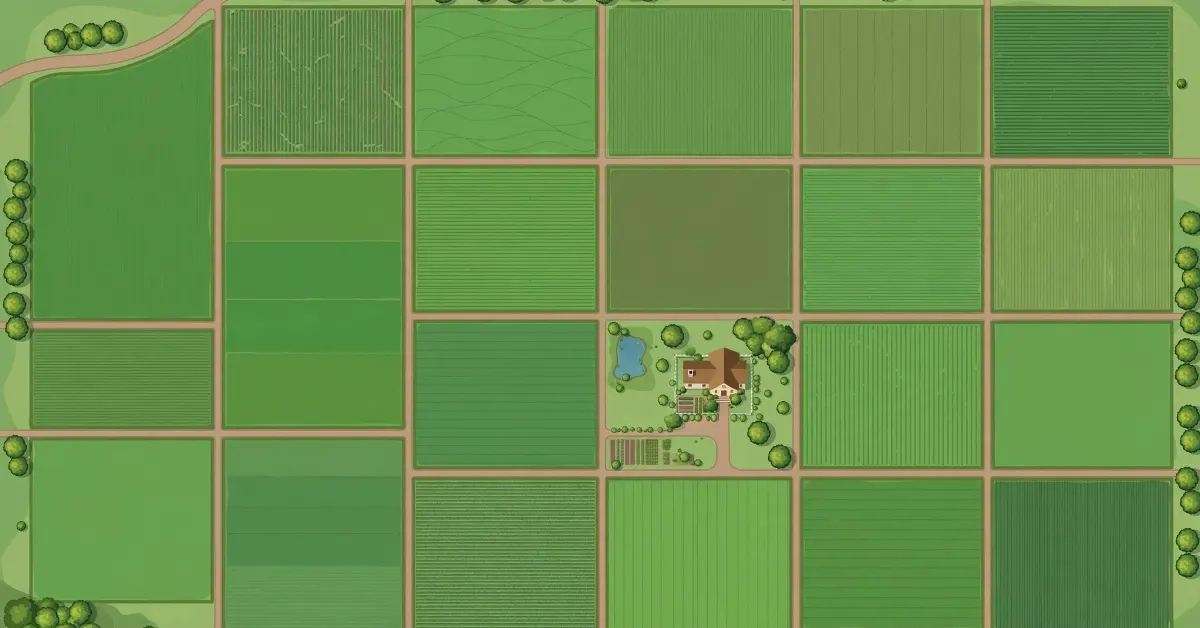
A hectare is a metric unit of area equal to exactly 10,000 square meters. The most intuitive way to picture it is as a square with sides of 100 meters — 100 multiplied by 100 gives 10,000, which is the entire definition in a single multiplication. Walk 100 meters in a straight line, turn ninety degrees, walk another 100 meters, and repeat twice more: the ground you have enclosed is one hectare.
The name itself tells the story. “Hecto” is the metric prefix meaning one hundred, and an “are” is an older metric unit equal to 100 square meters — so a hectare is literally one hundred ares. The are has mostly faded from everyday use, but the hectare stuck around because it landed in a sweet spot: big enough to describe farms and forests without unwieldy numbers, small enough to describe gardens and building plots with useful precision.
In feet, each side of that 100-meter square measures about 328 feet. So if you prefer imperial units, picture a square roughly 328 feet on each side — a little longer than an American football field is long. That square encloses the full 107,639 square feet. The hectare is a purely metric creation, but converting it into feet is the fastest way to make it feel real if you grew up measuring land in acres.
It helps to anchor the 100-meter side to something your body knows. A hundred meters is the sprint straightaway — the distance of the Olympic 100-meter dash. If you have ever watched that race, you have seen exactly one side of a hectare. Now square it: four of those sides make the perimeter, 400 meters in total, which is precisely one lap of a standard outdoor running track. A hectare is the ground inside that lap, pulled into a square.
2. Hectare Conversions: Acres, Square Feet, and Square Meters
The conversion most people need is the one between hectares and acres: one hectare equals 2.471 acres. Going the other direction, one acre equals 0.4047 hectares. Because the hectare is the larger unit, converting acres to hectares always gives you a smaller number — a 100-acre farm, for example, is about 40.47 hectares. Memorizing 2.471 (or the rounded 2.47) covers nearly every conversion you will meet in practice.
In square feet, one hectare is 107,639 square feet. That number comes straight from the definition: 10,000 square meters multiplied by 10.7639 square feet per square meter. For finer work, there are 11,960 square yards in a hectare, and at the large end of the scale, one hectare is just 0.003861 square miles — which means it takes about 259 hectares to make a single square mile. A square kilometer, meanwhile, contains exactly 100 hectares, since a square kilometer is one million square meters.
If you ever need to measure out a hectare yourself — say, to mark a field boundary or lay out a large garden — a long tape measure and a helper are essential, because few tapes stretch anywhere near 100 meters. Our guide on how to read a measuring tape covers the foot, inch, and metric markings you will be reading along the way, so your 100-meter sides come out straight and true.
For everyday estimates, you can round 2.471 to 2.5 without much harm: a 40-hectare farm is roughly 100 acres. But when money is involved — a land purchase, a crop contract, a subsidy payment — use the full 2.471, because rounding errors grow with size. On a 1,000-hectare property, the gap between 2.47 and 2.471 is a full hectare, or nearly two and a half acres. Precision matters most exactly where the numbers get big.
At the top of the scale, the square kilometer takes over as the natural unit — exactly 100 hectares, or one million square meters. National parks, forests, and wildfire areas are usually reported in square kilometers once they pass a few hundred hectares, precisely because the conversion is trivial: move the decimal point two places. A 450-hectare fire is a 4.5-square-kilometer fire. The metric system keeps rewarding you for learning it.
3. How Big Is a Hectare? Visual Comparisons
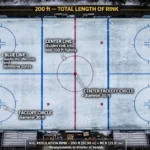
Numbers only go so far, so here is the mental image that works best for most people: one hectare is roughly the size of two American football fields side by side. The fields do the heavy lifting in that comparison because most of us have stood on or inside a stadium and felt how big the playing surface is. Double that feeling and you have a hectare — a genuinely large patch of ground that still fits comfortably inside a neighborhood.
City dwellers can picture a hectare as a substantial urban park or a large city block with room to spare. Sports fans might think of it as about one and a half soccer pitches, though pitch sizes vary. The table below translates common land sizes into hectares so you can calibrate your sense of scale, from a half-hectare garden plot up to a full square kilometer.
Another way to feel the scale is to think in halves and doubles. Half a hectare — 5,000 square meters, about 1.24 acres — is a generous garden or a small orchard. Double the hectare to two hectares and you have a small farm field, the kind a single tractor works in an afternoon. At ten hectares, you are looking at a proper farm parcel or a large vineyard; at a hundred hectares, a full square kilometer of ground, you have an estate or a nature reserve. The table’s last row is worth memorizing too: a single acre is just 0.4047 hectares, so to get a rough feel for any acreage figure in hectares, multiply by 0.4.
| Land area | Square meters | Hectares | Acres |
|---|---|---|---|
| Half a hectare | 5,000 m² | 0.5 ha | 1.24 acres |
| One hectare | 10,000 m² | 1 ha | 2.471 acres |
| Two hectares | 20,000 m² | 2 ha | 4.94 acres |
| Five hectares | 50,000 m² | 5 ha | 12.36 acres |
| Ten hectares | 100,000 m² | 10 ha | 24.71 acres |
| Fifty hectares | 500,000 m² | 50 ha | 123.55 acres |
| One hundred hectares | 1,000,000 m² | 100 ha | 247.11 acres |
| One acre (for reference) | 4,047 m² | 0.4047 ha | 1 acre |
4. Where Hectares Are Used: Farming, Forestry, and Land Sales
The hectare is the working language of agriculture across most of the world. Farm sizes, crop yields, and seeding rates are quoted per hectare: wheat yields in tonnes per hectare, fertilizer in kilograms per hectare, stocking rates in animals per hectare. Because the unit is exactly 10,000 square meters, the arithmetic stays clean — a farmer with 50 hectares knows instantly that they are working 500,000 square meters, with no awkward conversion factors in between.
Forestry runs on hectares too. Timber volumes, replanting quotas, and conservation areas are all measured in hectares, and national parks from Canada to Australia publish their sizes in hectares or square kilometers. When you read that a wildfire burned 2,000 hectares, you can convert it immediately: about 4,942 acres, or just under eight square miles. Land registries in metric countries record plot sizes in hectares as a matter of course, and vineyards describe their holdings in hectares the way a jeweler describes diamonds in carats.
The main exception is the handful of countries that still measure land in acres — most notably the United States — where listings quote acreage and the hectare rarely appears outside scientific or international contexts. Everywhere else, the hectare won. It is the standard unit of the metric system for land, recognized internationally, and it keeps every land calculation in clean powers of ten.
Real estate listings are where most people meet the hectare for the first time. In Australia, New Zealand, South Africa, and across Europe, rural property is listed in hectares almost exclusively — a “4-hectare lifestyle block” or a “120-hectare grazing property.” If you are browsing those listings from an acres-based country, the 2.471 multiplier is your constant companion. And when listings give square meters instead — common for smaller plots — just move the decimal point four places: 8,500 square meters is 0.85 hectares.
5. Hectare vs. Acre: What’s the Difference?
The difference between a hectare and an acre is simply one of size and system. A hectare is 10,000 square meters; an acre is about 4,047 square meters. The hectare is the larger unit — roughly two and a half times the size of an acre — and it belongs to the metric system, while the acre belongs to the imperial system still used in the United States and a few other countries. If someone offers you “a hectare of land” versus “an acre of land,” take the hectare: you are getting 2.471 times as much ground.
The acre’s odd size is a legacy of its history as a day’s plowing for a team of oxen, while the hectare was designed deliberately as a clean metric square. That design difference is why conversions between the two always involve the slightly awkward 2.471 factor — the units were born in different measurement worlds. In practice, just remember the direction: hectares to acres, multiply by 2.471; acres to hectares, multiply by 0.4047.
Scale helps here too. A square mile contains 259 hectares, a number worth knowing because it connects the metric land unit to the imperial one most Americans know best. If you want the full story on that unit, our breakdown of what a mile is walks through miles, square miles, and their metric equivalents in detail.
One common mix-up is worth clearing up: the hectare is sometimes confused with the “are” (100 square meters) or mistaken for an acre because the words sound faintly alike. They are three different units at three different scales — an are is a hundredth of a hectare, and an acre is about 40 percent of one. When in doubt, return to the definition: 100 meters by 100 meters, 10,000 square meters, 2.471 acres. Everything else is arithmetic.
Frequently Asked Questions
Is a hectare bigger than an acre?
Yes — a hectare is considerably bigger. One hectare equals 2.471 acres, so it takes nearly two and a half acres to match a single hectare. In square meters, a hectare is 10,000 m² while an acre is about 4,047 m². The words sound similar, but the hectare is the heavyweight of the two.
How many hectares are in a square mile?
There are about 259 hectares in one square mile. A square mile contains 640 acres, and dividing 640 by 2.471 acres per hectare gives 259. Going the other way, one hectare is 0.003861 square miles.
How many square feet are in a hectare?
One hectare contains 107,639 square feet. That comes from multiplying 10,000 square meters by 10.7639 square feet per square meter. Each side of the hectare’s 100-meter square measures about 328 feet.
How long does it take to walk across a hectare?
Walking straight across one side — 100 meters — takes most people about one to two minutes at a comfortable pace. Walking the full 400-meter perimeter takes roughly five minutes. It is a useful reality check: if you can stroll around a property in five minutes, you have just walked the boundary of a hectare.
Why do farmers use hectares instead of acres?
Farmers in most of the world use hectares because the unit is metric: exactly 10,000 square meters, so all the arithmetic around yields, seeding rates, and fertilizer stays in clean powers of ten. Acres remain standard mainly in the United States, where the imperial system persists for land measurement.
Final Thoughts
The hectare earns its place as the world’s land unit by being exactly what it claims to be: a 100-by-100-meter square, 10,000 square meters, 2.471 acres, no surprises. It is big enough to describe a farm without drowning in digits and small enough to describe a garden without resorting to fractions — a rare unit that stays convenient across a thousand-fold range of sizes. It is also a quiet showcase for the metric system’s elegance: no fractions, no historical accidents, just clean powers of ten. Whether you are reading a property listing, following a wildfire report, or picturing how much land two football fields really cover, the hectare gives you a dependable mental ruler. Keep the three anchor numbers — 10,000 square meters, 2.471 acres, 100 meters a side — and every land measurement you ever meet becomes instantly readable.

I’m Elena Cross, a content writer at MeasuresIt.com, where I turn complex measures, units, and mathematical concepts into clear, accurate, and easy-to-read articles. I’m passionate about precision in numbers and in words and I write to help readers actually understand measurements, not just memorize them.