How Tall Is the Great Wall of China? Height & Length
Introduction
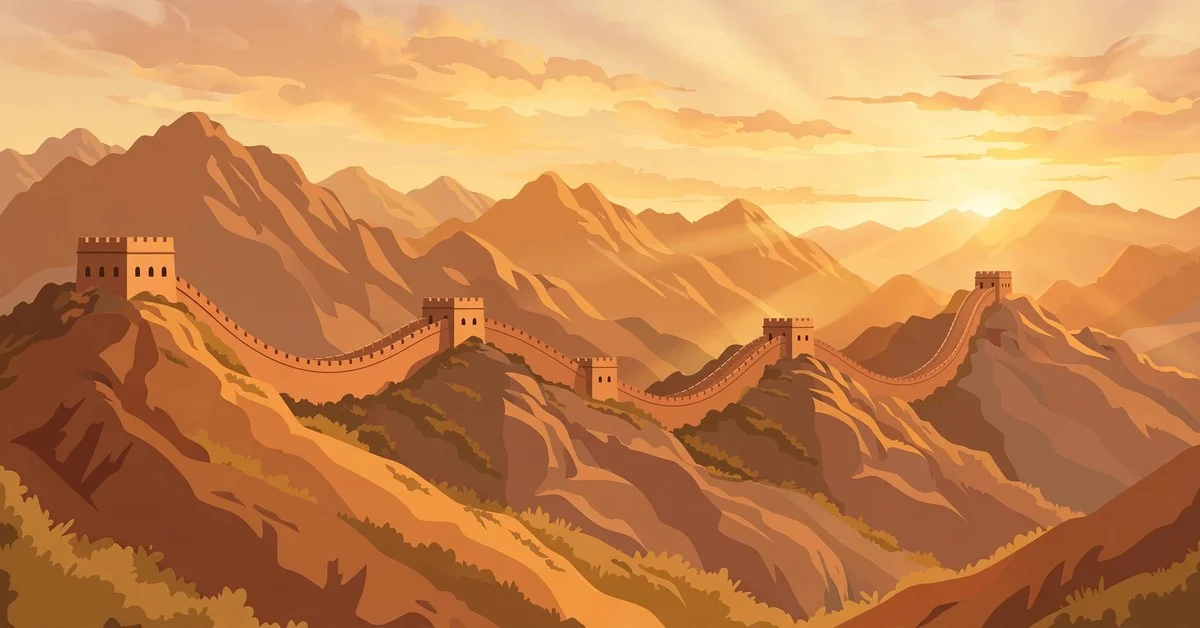
Standing at the foot of the Great Wall is a moment most visitors never forget, because photos never quite capture its size. The Great Wall of China is about 20 to 26 feet tall (roughly 6 to 8 meters), depending on which section you visit. That is about the height of a two-story house, and it runs across northern China for an incredible 13,170 miles.
So how tall is the Great Wall when you see it in person? Taller than a giraffe, shorter than a telephone pole, and built to make any attacker think twice. Whether you are planning a trip to Badaling, working on a school project, or settling a friendly debate about the great wall of china height, this guide gives you the exact numbers. You will find conversion charts, 15 everyday objects that match the wall’s height, watchtower dimensions, and simple ways to picture 20 to 26 feet without any tools.
Conversion Chart
The wall’s height is a range, not a single number, because different sections were built in different centuries. Here is the range converted into the units you will actually use.
| Unit | Wall Height (Range) |
|---|---|
| Feet | 20–26 ft |
| Inches | 240–312 in |
| Yards | ≈ 6.7–8.7 yd |
| Meters | ≈ 6.1–7.9 m |
| Centimeters | ≈ 610–790 cm |
The total length converts just as neatly, and it is worth knowing since people often confuse the two numbers.
| Unit | Total Wall Length |
|---|---|
| Miles | 13,170 mi |
| Kilometers | ≈ 21,196 km |
Keep in mind that 20 to 26 feet describes the wall body itself, the part you walk on and lean against. The watchtowers rising above it are taller, and ruined sections in remote areas can be much lower after centuries of weather and wear.
How Long Is the Great Wall of China?
The wall system stretches about 13,170 miles (21,196 km), according to a 2012 survey by China’s State Administration of Cultural Heritage. That is more than half the distance around the Earth at the equator.
Ming Dynasty Walls vs Earlier Walls
Not all of the Great Wall was built at once, and that explains the height differences. The earliest walls date back to warring states in the 7th century BC, and the first emperor of Qin connected and extended them around 220 BC. Those early walls were mostly rammed earth, packed layer by layer, and they were generally lower than what stands today.
The wall most people picture was built by the Ming dynasty, which ruled from 1368 to 1644. Ming engineers used stone foundations, brick facing, and lime mortar, and they built taller and stronger than anyone before them. The 20 to 26 foot range describes these Ming sections. Where you see crumbling earthen mounds in western China, you are usually looking at older Han dynasty work, which was never as tall.
How Tall Are the Watchtowers?
The watchtowers are the square towers that pop up along the wall every few hundred yards, and they stand noticeably taller than the wall itself. A typical Ming watchtower rises about 30 to 40 feet, roughly one to two stories above the walkway. Guards used them to live, store weapons, and send smoke signals when enemies approached.
That extra height served a real purpose. From the top of a 35-foot tower, a guard could see over the wall’s battlements and spot movement far across the valley below. If you are comparing, a watchtower is only a small fraction of the Eiffel Tower’s height, but on a mountain ridge it still commands the whole landscape.
Famous Sections and Visiting Facts
Badaling is the most visited section, sitting about 40 miles northwest of Beijing with fully restored Ming brickwork and smooth walkways. Mutianyu, a little farther out, is known for its dense cluster of watchtowers and forested mountain setting, and it draws visitors who want slightly smaller crowds. Both sections sit at the taller end of the 20 to 26 foot range because Ming builders made the walls near the capital especially strong.
Visiting means climbing, so bring good shoes. The steps can be steep and uneven, with some stretches rising at sharp angles up the ridgeline. Millions of people visit each year, and the wall’s size makes more sense once you are standing on it: the walkway is wide enough for several soldiers to march side by side, and the drop on either side reminds you exactly why the height mattered.
Common Objects About as Tall as the Great Wall
The table below lines up everyday items with the wall’s height range, so you can picture 20 to 26 feet without a ruler.
| Object | Approximate Height |
|---|---|
| A two-story house | 20–25 ft to the roofline |
| A school flagpole | 20–25 ft |
| A 20-foot shipping container stood on end | 20 ft |
| A giraffe | up to 18–20 ft |
| Two basketball hoops stacked | 20 ft (10 ft each) |
| Two African bush elephants stacked | 20–26 ft (10–13 ft each) |
| A male orca, nose to tail | 20–26 ft |
| A telephone pole above ground | 25–30 ft visible |
More Everyday Items Around 20–26 Feet Tall
Seven more references for when the first table does not have the shape you need.
| Item | Approximate Height |
|---|---|
| Three garage doors stacked | 21–24 ft (7–8 ft each) |
| Five adults standing on shoulders | ≈ 27–28 ft |
| An NFL goalpost | ≈ 35 ft to the top |
| Two semi trailers stacked | ≈ 27 ft (13.5 ft each) |
| Two double-decker buses stacked | ≈ 29 ft (14.4 ft each) |
| Four king-size beds end to end | ≈ 26.7 ft |
| Half a city bus | 20 ft (bus ≈ 40 ft long) |
How Tall Is the Great Wall of China?
Think of the wall as standing between two familiar heights. It is a little taller than a giraffe stretched to its full reach, and a little shorter than a telephone pole with its wires. If you stood three tall adults on each other’s shoulders, their combined height would come close to the wall’s lower end.
That scale makes sense once you remember the wall’s job. Twenty-six feet of brick was high enough that no horse could jump it and no ladder could be carried up a mountain slope unnoticed, yet low enough that defenders on top could strike downward at climbers. At Mount Everest’s 29,032 feet, the mountains the wall crosses dwarf the wall itself, which is why it follows the ridges instead of trying to outclimb them.
Easy ways to estimate 20 to 26 feet in everyday life:
- Count two stories: Look at any two-story house or office building. The roofline sits right in the wall’s height range, making it the single best everyday reference.
- Stack two hoops: A basketball rim is exactly 10 feet off the ground. Two of them, one on top of the other, gives you the wall’s lower end at 20 feet.
- Use your stride: An adult step is about 2.5 feet. Pace out 10 steps along the ground, then imagine that distance standing upright against the sky.
- Check a flagpole: School and office flagpoles usually stand 20 to 25 feet tall. If you can picture one, you can picture the wall.
- Try a measuring tape: A standard tape measure runs 25 feet, which covers almost the entire height range in one pull.
- Line up shipping containers: A standard container is 20 feet long. Stand one on end in your mind and you have the wall’s minimum height exactly.
1. A Two-Story House
The most reliable comparison is the house on your street. A typical two-story home measures about 20 to 25 feet from the ground to the roofline, landing squarely inside the Great Wall’s height range. Stand on the sidewalk and look up at the second-floor windows, then keep going to the roof edge. That full span is what an enemy saw when approaching the wall. Most people underestimate it until they measure it, which is why the wall looks smaller in photographs than it feels in person.
2. A School Flagpole
School flagpoles usually stand between 20 and 25 feet, putting them shoulder to shoulder with the wall. Picture the pole outside your old school, the one with the flag snapping at the top. Now imagine a brick wall that tall stretching across a mountain ridge as far as you can see. The pole gives you the vertical scale in one glance, and the wall simply repeats that height for thousands of miles. It is a simple image, but it works every time.
3. A 20-Foot Shipping Container
Shipping containers come in standard lengths, and the smaller one is exactly 20 feet long. Picture that container tipped upright on its end, and you are looking at the very bottom of the Great Wall’s height range. Containers are boxy and familiar from ports and highways, so the image is easy to hold. Add another quarter of that height and you reach the wall’s 26-foot maximum. Few comparisons are this exact, which makes this one worth remembering.
4. A Giraffe
A full-grown giraffe can reach about 18 to 20 feet when it stretches its neck to the tallest leaves. That puts the tallest land animal just under the wall’s lower end. Imagine the giraffe standing beside the wall with its head at the top of the battlements, almost able to peek over. The wall wins by a few feet, which was rather the point. Even the tallest animal on Earth could not simply look over the defenses.
5. Two Basketball Hoops Stacked
Every basketball rim sits exactly 10 feet above the court. Stack two hoops vertically and you get a clean 20 feet, matching the wall’s minimum height precisely. This is one of the easiest estimates to use because the 10-foot rim is drilled into every sports fan’s memory. Picture one rim on the court and an identical rim floating directly above it, and you have built a Great Wall in your head in about three seconds.
6. Two African Bush Elephants Stacked
An African bush elephant stands about 10 to 13 feet at the shoulder, making it the heaviest land animal alive. Stack two of them and you land between 20 and 26 feet, covering the wall’s entire height range. The image is dramatic: two enormous gray bodies, one balanced impossibly on the other, reaching from the ground to the top of the battlements. As a mental picture it captures just how massive the wall really is.
7. A Male Orca, Nose to Tail
A large male orca measures about 20 to 26 feet from nose to tail, which is a remarkable coincidence. Take that sleek black-and-white body, stand it on its tail, and it matches the Great Wall from base to battlement. Orcas are familiar from documentaries and aquariums, so most people can picture the length. The wall is exactly as tall as a killer whale is long.
8. A Telephone Pole
Telephone poles carry their wires about 25 to 35 feet off the ground, with roughly 25 to 30 feet visible above the soil. That puts a standard pole just above the wall’s height range. Next time you drive past a row of poles, pick one and imagine a brick wall that tall running along the road instead. The poles march into the distance the way the wall does across the mountains, which makes the comparison feel natural.
9. Three Garage Doors Stacked
A standard residential garage door is 7 to 8 feet tall. Stack three of them and you get 21 to 24 feet, sitting comfortably in the middle of the wall’s range. Almost everyone has stood in front of a garage door, so the unit of measure is already in your memory. Picture three of those familiar rectangles piled on top of each other. It is not glamorous, but it is accurate, and accuracy is what makes an estimate useful.
10. Five Adults Standing on Shoulders
An average adult is about 5.5 feet tall. Five of them balanced on each other’s shoulders would reach roughly 27 to 28 feet, just a touch above the wall’s maximum. If you have ever seen an acrobatic troupe build a human pyramid, you have seen something close to the wall’s height. The image is silly enough to stick in your memory, which is exactly what a good estimate should do.
11. An NFL Goalpost
Football goalposts tell a two-part story. The crossbar sits 10 feet off the ground, while the uprights rise to about 35 feet total. That means the wall’s full height fits between the crossbar and the top of the uprights. Next time you watch a field goal sail through, notice how far below the top of the posts the 26-foot mark would fall. The wall would clear the crossbar with room to spare but still fall well short of the uprights’ tips.
12. Two Semi Trailers Stacked
A standard semi trailer stands about 13.5 feet tall. Stack two of them and you reach roughly 27 feet, just over the wall’s top end. Highway drivers see these trailers every day, so the height is easy to recall: picture one trailer parked on top of another at a rest stop. The Great Wall is essentially that tall, built from brick instead of aluminum.
13. Two Double-Decker Buses Stacked
The classic London double-decker bus is about 14.4 feet tall. Two of them stacked reach roughly 29 feet, a few feet above the wall’s maximum. Tourists know this vehicle well, and its bright red shape is easy to picture. Imagine one bus parked on the roof of another, then shave a little off the top. What remains is the Great Wall’s height, rendered in the most British unit of measure available.
14. Four King-Size Beds End to End
A king-size bed is about 6.7 feet long. Lay four of them end to end and you get roughly 26.7 feet, matching the wall’s upper end almost exactly. This one turns a length into a height, which is fine for estimation. Picture four beds in a row on a showroom floor, then tip the whole row upright. The result is as tall as the Great Wall, and a reminder that familiar furniture can measure anything.
15. Half a City Bus
A standard city bus runs about 40 feet long. Cut it in half and you have 20 feet, the wall’s minimum height. Buses are everywhere, and most people have a good sense of how long one is. Take that front half, stand it on its bumper, and you are looking at the lower end of the Great Wall’s range. It is a quick mental trick: half a bus up, a whole wall across.
Frequently Asked Questions
How tall is the Great Wall of China in meters?
The wall is about 6 to 8 meters tall, which converts from the 20 to 26 foot range. Ming dynasty sections near Beijing sit at the taller end of that range.
How long is the Great Wall of China?
The wall system stretches about 13,170 miles (21,196 km), according to a 2012 survey by China’s State Administration of Cultural Heritage. That is more than half the distance around the Earth at the equator.
How tall are the Great Wall watchtowers?
Watchtowers typically rise about 30 to 40 feet, roughly one to two stories above the wall walkway. Guards used them for shelter, storage, and sending smoke signals.
Was the Great Wall built all at once?
No. Walls were built, joined, and rebuilt over many centuries. The first emperor of Qin connected earlier walls around 220 BC, and the Ming dynasty (1368–1644) built most of the tall brick sections visitors see today.
Final Thoughts
So how tall is the Great Wall of China? About 20 to 26 feet, or roughly the height of a two-story house, and that number is now yours to keep. You can estimate it anywhere: two stacked basketball hoops, a school flagpole, or a 25-foot tape pulled to its full length. The wall’s true wonder is not just its height but its length, with those 20-plus feet of brick repeating across 13,170 miles of mountains and desert. Remember too that the Ming builders made these sections tall on purpose, while older rammed-earth stretches were lower. Next time the topic comes up, whether you are planning a visit to Badaling, helping with homework, or just curious, you will have the answer ready, no tools required.

I’m Elena Cross, a content writer at MeasuresIt.com, where I turn complex measures, units, and mathematical concepts into clear, accurate, and easy-to-read articles. I’m passionate about precision in numbers and in words and I write to help readers actually understand measurements, not just memorize them.