Standard Sofa Dimensions: 3-Seat, Loveseat & Sectional Guide
Introduction
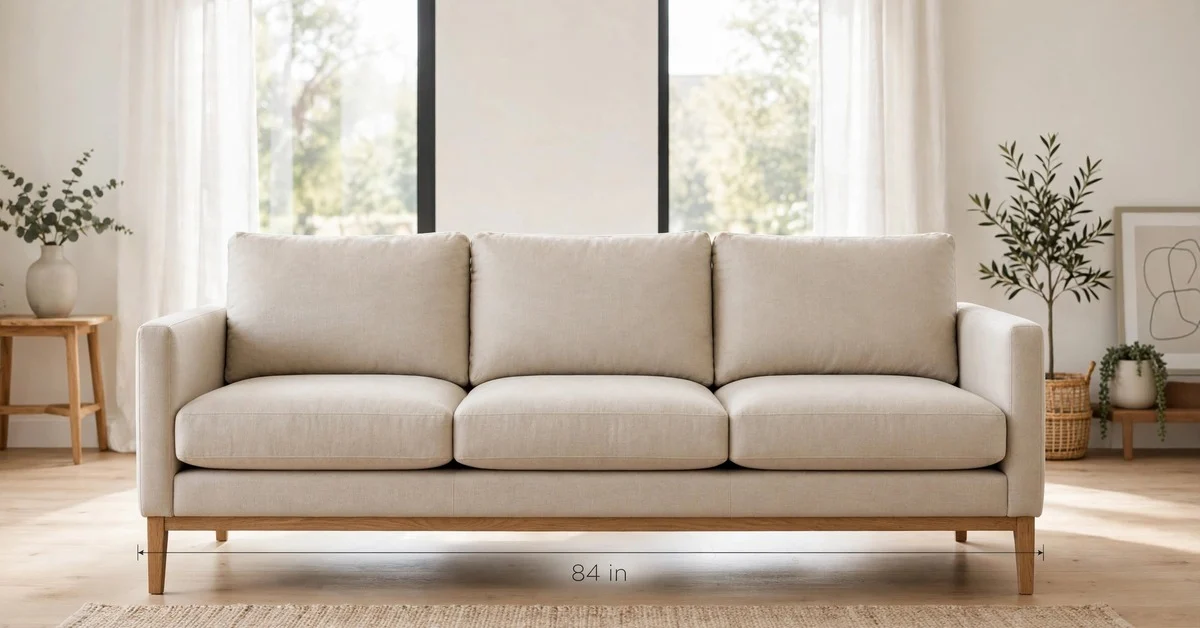
Buying a new couch feels simple until delivery day, when it will not fit through your door. Knowing standard sofa sizes before you shop saves you time, money, and a lot of heavy lifting. A standard 3-seat sofa measures about 84 inches wide and 38 inches deep. That is roughly 213 cm wide and 97 cm deep. Most standard sofas also stand about 38 inches tall, from the floor to the top of the backrest.
You will need these numbers when you plan a living room layout. You will need them when you order a couch online, where you cannot sit on it first. And when you check whether the sofa fits through your hallway and front door. Grab a measuring tape and check your wall space first. Once you know width, depth, and height, you can compare every style. Loveseats, apartment sofas, sleepers, and sectionals each have their own standard sizes. This guide lists them all, with a size chart and 15 furniture comparisons.
Standard Sofa Dimensions in Inches and Centimeters
Here are the key sofa measurements in both inches and centimeters:
| Measurement | Inches | Centimeters |
|---|---|---|
| Standard 3-seat sofa width | 84 in | ≈ 213 cm |
| Standard sofa depth | 38 in | ≈ 97 cm |
| Standard sofa height | 38 in | ≈ 97 cm |
| Loveseat width | 60 in | ≈ 152 cm |
| Apartment sofa width | 72 in | ≈ 183 cm |
| Seat depth | 22–24 in | ≈ 56–61 cm |
| Seat height | ≈ 18 in | ≈ 46 cm |
| Armrest height | ≈ 25 in | ≈ 64 cm |
Common Sofa Types and Their Sizes
| Sofa type | Approximate size (W × D) |
|---|---|
| Standard 3-seat sofa | ~84 × 38 in |
| Loveseat | ~60 × 38 in |
| Apartment sofa | ~72 × 38 in |
| Sleeper sofa | ~84 × 38 in |
| Chaise lounge | ~65 × 30 in |
| Small L-sectional | ~96 in long side |
| Settee | ~54 × 34 in |
| Futon (full-size) | ~80 × 34 in |
More Furniture Near Standard Sofa Size
| Furniture item | Approximate size |
|---|---|
| Recliner chair | ~36 × 38 in |
| Accent chair | ~30 × 32 in |
| Daybed | ~75 × 39 in |
| Standard interior door | ~36 in wide |
| Queen-size bed | ~60 × 80 in |
| 6-seat dining table | ~72 × 36 in |
| 8×10 area rug | 96 × 120 in |
How Big Is a Standard Sofa?
Picture three adults sitting side by side with a little elbow room. That is an 84-inch sofa. It runs about two feet longer than a 6-foot-tall person lying down, and it covers roughly 22 square feet of floor. A loveseat, at 60 inches, is the slightly smaller cousin — two feet narrower. A small sectional, at about 96 inches, is the slightly larger one — one foot wider.
Most people place their TV about 7 feet from a standard sofa, which pairs well with a 55-inch TV on the opposite wall. Give the sofa 30 to 36 inches of walking space in front so the room stays easy to move through.
Easy ways to estimate standard sofa width in everyday life:
- Your own height — Lie on the floor and add about one foot. A standard sofa is roughly as long as a 6-foot person plus a cushion.
- Floor tiles — Large square tiles often measure 24 inches across. Count three and a half tiles to picture 84 inches.
- Two interior doors — A standard door is about 36 inches wide. A sofa spans about two doors plus a bit more.
- A queen bed frame — A queen mattress is 60 inches wide. Picture it two feet wider, and you have a sofa.
- Two armchairs — Push two 36-inch armchairs together with a small gap, and you get roughly sofa width.
1. Standard 3-Seat Sofa
The standard 3-seat sofa is the benchmark every other size is measured against. It runs about 84 inches wide, 38 inches deep, and 38 inches tall. That width gives three adults a comfortable seat, with roughly 22 to 24 inches of sitting depth per person. Seat height usually sits near 18 inches, which suits most coffee tables. If you are furnishing a medium or large living room, this is the safe default choice. It works against a long wall, floating in the middle of a room, or facing a fireplace. Measure twice before you buy, because 84 inches leaves little room for error in tight spaces.
2. Loveseat
A loveseat is built for two people and measures about 60 inches wide and 38 inches deep. That is two feet narrower than a standard sofa, which makes it a strong pick for small apartments, reading corners, and bedrooms. Seat depth stays close to standard at around 22 inches, so comfort does not suffer. Many buyers pair a loveseat with a larger sofa to fill an L-shaped seating area. It also works well across from an armchair. Before you order, check the full width with the arms included, because curved or rolled arms can add a few inches.
3. Apartment Sofa
An apartment sofa sits between a loveseat and a full-size sofa at roughly 72 inches wide. It seats three people in a squeeze, though two sit more comfortably. The depth matches standard sofas at about 38 inches, so it feels like a real couch, not a bench. This size suits narrow living rooms, studio apartments, and guest rooms where a full 84-inch sofa would block walkways. Many apartment sofas have slimmer arms and a shallower profile to save space. If your wall is between 7 and 8 feet wide, this size often fits best.
4. Sleeper Sofa
A sleeper sofa hides a fold-out bed inside a standard sofa frame. The outside measures about 84 inches wide and 38 inches deep, the same as a regular 3-seat sofa. The mattress inside usually matches standard bed sizes such as a full or queen, folded into thirds. You will need extra floor space in front of the sofa to pull the bed out, so allow about 7 feet of clear room. Sleeper mechanisms add weight, often pushing the sofa past 150 pounds. Measure your doorways before delivery, because sleepers do not come apart easily.
5. Chaise Lounge
A chaise lounge is a long, single-person seat that measures roughly 65 inches long and 30 inches wide. It gives you room to stretch your legs fully, which makes it popular at the end of a sectional or beside a sunny window. The seat height sits a little lower than a standard sofa, usually around 16 to 17 inches. Because one person uses the whole piece, the width matters less than the length. Chaises add a relaxed look to a living room without taking the floor space of another full chair.
6. Small L-Sectional
A small L-shaped sectional usually spans about 96 inches along its longest side. That is one foot wider than a standard sofa, which buys room for four or five people. The shorter side, or chaise return, often runs about 60 inches. Sectional sizes vary by configuration, so always check the exact layout drawing before you buy. Some models let you flip the chaise from left to right, which helps in awkward rooms. Give the sectional at least 30 inches of walking space on each open side so the room still feels easy to move through.
7. Settee
A settee is a narrow, upright sofa that measures about 54 inches wide. It seats two people in a more formal, upright position than a loveseat. Settees come from older furniture styles and often have exposed wooden legs and firmer cushions. You will see them in entryways, at the foot of a bed, or along a dining room wall. The seat depth runs shallower than a standard sofa, usually around 20 inches. It is a decorative choice first and a lounging seat second, so test the comfort before you commit.
8. Full-Size Futon
A standard full-size futon measures about 80 inches wide, very close to a standard sofa. The frame folds down into a bed and back up into a couch, which makes it a budget-friendly sleeper option. Seat depth in couch mode runs near 30 inches because the mattress is thinner than sofa cushions. Futons sit lower than most sofas, with seat heights around 14 to 16 inches. They suit dorm rooms, home offices, and first apartments. Check the folded depth too, since open futons need a clear floor zone behind them.
9. Recliner Chair
A typical recliner chair measures about 36 inches wide and 38 inches deep. That is less than half the width of a standard sofa, so two recliners fit in the space of one couch. The depth grows when the footrest opens, sometimes reaching 60 inches or more. Leave clearance behind the chair too, since the backrest tilts back about 8 to 10 inches from the wall. Recliners pair well beside a sofa as extra seating. If floor space is tight, look for a wall-hugger model that needs only a few inches behind it.
10. Accent Chair
An accent chair usually measures around 30 inches wide and 32 inches deep. It is the smallest real seat on this list and the easiest to move between rooms. Designers use accent chairs to fill corners, flank a fireplace, or complete a seating group without adding another sofa. The seat height matches standard sofas at about 18 inches, so it looks right next to one. Because it is light and narrow, an accent chair also works as overflow seating that you can pull in when guests arrive.
11. Daybed
A daybed measures about 75 inches long and 39 inches deep, built around a standard twin mattress. By day it works like a deep sofa against the wall. By night it sleeps one adult comfortably. The length lands close to a standard sofa’s 84-inch width, so it fills a similar wall space. Daybeds suit guest rooms, home offices, and kids’ rooms where you want seating and a bed in one piece. Add large back pillows to make the 39-inch depth feel like a real couch during the day.
12. Standard Interior Door
A standard interior door is about 36 inches wide. Compare that to a 38-inch-deep sofa, and you see the classic delivery problem. Sofas usually pass through doors on their side, at an angle, which is why knowing the diagonal depth matters. Before delivery day, measure the narrowest point of your hallway and door frames, then compare it to the sofa’s height and depth. For a closer look at exact door measurements, see this guide to standard door size. Removing the door from its hinges can buy you an extra inch or two when the fit is tight.
13. Queen-Size Bed
A queen-size bed measures about 60 inches wide and 80 inches long. The width matches a loveseat, while the length falls just short of a standard sofa’s 84 inches. This comparison helps when you picture floor space. A sofa takes up roughly the same wall length as a queen bed turned sideways. If you have ever moved a queen mattress through a hallway, you already know how a standard sofa will handle. Both pieces are wide, awkward, and need a clear path with no tight turns.
14. 6-Seat Dining Table
A 6-seat dining table usually measures about 72 inches long and 36 inches wide. That length equals an apartment sofa, which makes the two pieces easy to picture side by side. In open-plan homes, the dining table often sits just a few feet from the sofa, so matching their scale keeps the room balanced. Allow about 36 inches of walking space between the table edge and the back of the sofa. If your sofa is 84 inches and your table is 72, the 12-inch difference is easy to spot once you look for it.
15. 8×10 Area Rug
An 8-by-10-foot area rug measures 96 inches long and 120 inches wide. Designers often center a standard 84-inch sofa on the 96-inch side, leaving about 6 inches of rug showing on each end. The front legs of the sofa should sit on the rug, which anchors the seating area visually. This rug size suits most living rooms with a single standard sofa and two chairs. If the rug is smaller than the sofa, the room can look unbalanced, so the 8-by-10 is the safe standard choice.
Frequently Asked Questions
How wide is a standard 3-seat sofa?
A standard 3-seat sofa is about 84 inches wide, which equals roughly 213 cm. Most models fall between 78 and 90 inches, so always check the exact width before you buy.
What is the standard depth of a sofa?
Standard sofa depth is about 38 inches from the front of the seat to the back of the frame. The actual sitting depth is shallower, usually 22 to 24 inches, because the backrest takes up the rest.
Will a standard sofa fit through a 32-inch door?
It depends on the sofa’s height and depth, not just its width. Movers usually tilt the sofa on its side and angle it through, which works if the diagonal is smaller than the doorway. Measure the narrowest point first, and remove the door from its hinges if the fit looks tight.
How much wall space does a sectional need?
Sectional sizes vary by configuration, so there is no single standard. A small L-shaped sectional often spans about 96 inches on its longest side. Allow at least 30 inches of walking space on each open side, and check the layout drawing for the exact footprint.
Final Thoughts
Standard sofa dimensions are easy to remember once you learn the three key numbers. A 3-seat sofa runs about 84 inches wide, 38 inches deep, and 38 inches tall. Loveseats shrink the width to about 60 inches, while apartment sofas land in the middle at 72 inches. Sectionals grow past 96 inches, and sleeper sofas keep the standard frame with a bed hidden inside. You do not need special tools to picture these sizes. Your own height, a queen-size bed, or a standard door all work as rough guides. Keep these numbers handy when you plan a living room layout, order a couch online, or check whether it fits through your front door. A quick measure before you buy beats a difficult return every time.

I’m Elena Cross, a content writer at MeasuresIt.com, where I turn complex measures, units, and mathematical concepts into clear, accurate, and easy-to-read articles. I’m passionate about precision in numbers and in words and I write to help readers actually understand measurements, not just memorize them.