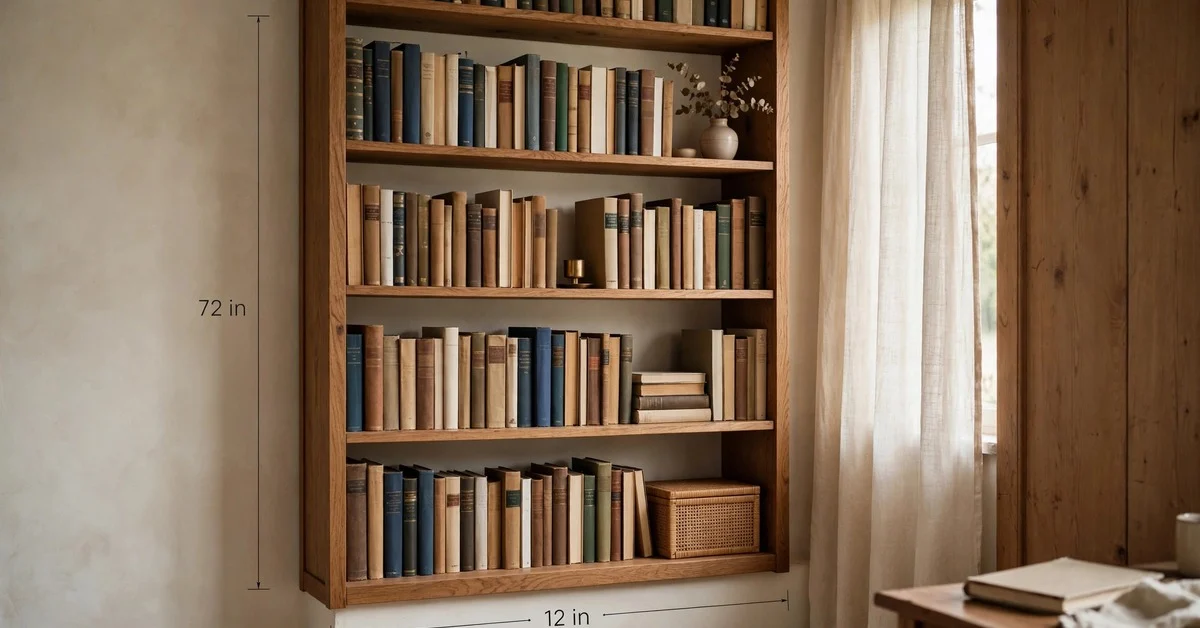
Standard Bookshelf Dimensions: Height, Width & Depth
Introduction
A standard bookshelf is usually 10 to 12 inches deep, with heights ranging from 24 to 84 inches and widths from 24 to 48 inches. That single range covers almost every freestanding bookcase sold today, from a low two-shelf unit to a full-height library shelf. Knowing the standard bookshelf dimensions before you shop saves you from the classic mistake: a bookcase that blocks a door swing or swallows an entire wall.
In inches, the conversion is simple, but metric readers can think of it this way: most bookcases stand roughly 60 to 210 centimeters tall, span about 60 to 120 centimeters wide, and measure 25 to 30 centimeters deep. Three numbers decide everything. Height decides how many shelves you get. Width decides how many books fit per shelf. Depth decides what fits at all.
These sizes matter in real homes. Renters need bookcases that fit through standard doorways. Parents want low shelves a child can reach. Readers need deep enough shelves for hardcovers and tall enough spacing for art books. Once you know the standard ranges, measuring your space and picking the right unit takes minutes.
Quick Conversion Chart
Here are the standard bookshelf dimension ranges in imperial and metric units.
| Unit | Converted Value |
|---|---|
| Depth: 10 inches | ≈ 25.4 cm |
| Depth: 12 inches | ≈ 30.5 cm |
| Height: 24 inches | ≈ 61 cm |
| Height: 36 inches | ≈ 91.4 cm |
| Height: 48 inches | ≈ 121.9 cm |
| Height: 60 inches | ≈ 152.4 cm |
| Height: 72 inches | ≈ 182.9 cm |
| Height: 84 inches | ≈ 213.4 cm |
| Width: 24 inches | ≈ 61 cm |
| Width: 48 inches | ≈ 121.9 cm |
| Shelf spacing: 10 inches | ≈ 25.4 cm |
| Shelf spacing: 14 inches | ≈ 35.6 cm |
Common Bookshelf Sizes
The eight sizes below cover nearly every standard bookcase on the market. Heights move in 12-inch steps because one shelf plus its spacing is roughly one foot.
| Bookcase Size | Approximate Height |
|---|---|
| Two-shelf bookshelf | 24 inches |
| Three-shelf bookshelf | 36 inches |
| Four-shelf bookshelf | 48 inches |
| Five-shelf bookshelf | 60 inches |
| Six-shelf bookshelf | 72 inches |
| Tall library bookshelf | 84 inches |
| IKEA Billy bookshelf | 79.5 inches |
| Corner bookshelf | 60 to 72 inches |
Everyday Objects That Are About 11 Inches Deep
A shelf depth of about 11 inches is hard to picture until you compare it with familiar objects. These seven items are roughly 11 inches in one dimension, just like a typical bookcase shelf.
| Object | Approximate Size |
|---|---|
| Hardcover novel | 9 to 11 inches tall |
| Letter-size paper | 11 inches long |
| Standard school notebook | 11 inches tall |
| Vinyl record | 12.3 inches across |
| Cereal box | 11 to 12 inches tall |
| Shoebox | 12 to 13 inches long |
| Basketball | 9.5 inches in diameter |
1. Two-Shelf Bookshelf (About 24 Inches Tall)
A two-shelf bookshelf is the shortest standard unit, standing about 24 inches high. Think of it as a waist-high display case. It holds two rows of books with space left on top for a lamp or a framed photo. Because it is low, it works well under windows or beside a sofa. Many people use it as a nightstand alternative in small bedrooms. At roughly 24 inches wide as well, it fits through every doorway and closet with room to spare. If you only own a few dozen books, this size keeps them within easy reach.
2. Three-Shelf Bookshelf (About 36 Inches Tall)
A three-shelf bookshelf reaches about 36 inches, roughly the height of a kitchen counter. This is one of the most popular sizes for apartments because it stores a real collection without dominating a wall. Three rows of paperbacks hold somewhere around 60 to 90 books, depending on their thickness. It sits comfortably behind a desk or under a wall-mounted television. The top surface doubles as a display shelf for plants or photos. At 36 inches tall, most adults can see the top shelf without stretching.
3. Four-Shelf Bookshelf (About 48 Inches Tall)
A four-shelf bookshelf stands about 48 inches tall, which puts its top shelf near shoulder height for an average adult. Four shelves hold a serious paperback library while keeping every book within arm’s reach. No step stool needed. This size is a favorite for home offices because it slides neatly beside a desk. With widths from 24 to 48 inches, you can buy a narrow one for a hallway or a wide one for a living room wall. The four-shelf unit balances storage and presence better than almost any other size.
4. Five-Shelf Bookshelf (About 60 Inches Tall)
A five-shelf bookshelf measures about 60 inches tall, or five feet. At this height, the bookcase starts to feel like real furniture rather than a side table. Five shelves give you room to mix books with baskets, framed art, and small decor. Many readers put paperbacks on the middle shelves and taller hardcovers or vases on the top and bottom. A five-foot unit typically anchors a reading corner without overwhelming a modest room. Measure your ceiling clearance before buying, since 60-inch units plus a top decorative item can crowd low ceilings.
5. Six-Shelf Bookshelf (About 72 Inches Tall)
A six-shelf bookshelf is about 72 inches tall, a full six feet. This is the classic tall bookcase most people picture when they think of a home library. Six adjustable shelves hold roughly 150 to 250 books, depending on size and shelf spacing. The top shelf usually sits just above eye level, so keep a small step stool handy for the highest row. These units look best against a wall with at least a few inches of breathing room above. In a room with standard eight-foot ceilings, a 72-inch bookcase leaves about two feet of space overhead.
6. Tall Library Bookshelf (About 84 Inches Tall)
A tall library bookshelf reaches about 84 inches, or seven feet. This is the tallest standard freestanding size. Seven feet of shelving stores a very large collection, but it also changes a room’s feel, making the wall look built-in and grand. Because of its height, this size should always be anchored to the wall with a bracket or strap to prevent tipping. That safety step matters in homes with children or pets. The 84-inch height fits under most standard ceilings with roughly a foot to spare. Measure both the unit and your ceiling before ordering.
7. IKEA Billy Bookshelf (79.5 x 31.5 x 11 Inches)
The IKEA Billy bookshelf is the world’s best-selling bookcase, and its dimensions have become a reference point: 79.5 inches tall, 31.5 inches wide, and 11 inches deep. At just under 80 inches, it stands between the six-shelf and tall library sizes. Its 11-inch depth sits squarely in the standard 10 to 12 inch range, deep enough for most hardcovers with a little room left over. The Billy’s adjustable shelves move in small increments, which makes the 10 to 14 inch standard shelf spacing easy to achieve. Because millions of people own one, its size is a useful benchmark when comparing other bookcases.
8. Corner Bookshelf (About 60 to 72 Inches Tall)
A corner bookshelf is designed to fit where two walls meet, and it usually stands 60 to 72 inches tall. Corner units often use triangular or L-shaped shelves, so their depth can feel shallower than a standard 10 to 12 inch bookcase. They are brilliant for small rooms because they turn dead corner space into storage. Each shelf typically holds fewer books than a straight bookcase of the same height, but the footprint stays tiny. Before buying, measure the corner carefully, since baseboards and molding can eat into the available depth on both sides.
9. Hardcover Novel (9 to 11 Inches Tall)
A typical hardcover novel stands 9 to 11 inches tall, which is why shelf spacing matters so much. Standard adjustable shelves sit 10 to 14 inches apart, so most hardcovers fit with an inch or two of clearance. If your collection runs to oversized art books or coffee-table volumes, you will need the wider end of that spacing. When shopping, compare the tallest book you own with the shelf spacing of the bookcase. A quick measurement with a tape measure takes seconds and prevents the frustration of books that must lean sideways.
10. Letter-Size Paper (11 Inches Long)
A sheet of letter-size paper is exactly 11 inches long, which makes it a perfect mental ruler for shelf depth. Hold a sheet upright against a bookcase and you will see that the standard 10 to 12 inch depth is almost exactly one sheet of paper. That is no accident. Bookcases evolved around the sizes of the printed objects they hold. If you can picture an 11-inch sheet, you can picture how far a shelf sticks out from the wall. This trick helps when you are comparing bookcases online and cannot see them in person.
11. Standard School Notebook (11 Inches Tall)
A standard school notebook measures about 11 inches tall, matching shelf depth almost perfectly. Notebooks, binders, and folders all share this roughly 11-inch family of sizes, which is another reason the 10 to 12 inch depth became standard. A shelf much shallower than 10 inches would leave notebooks hanging off the edge. A shelf much deeper than 12 inches would waste space behind them. So the 11-inch notebook is both a measuring tool and a design explanation. Stack a few notebooks on a table and you have an instant model of a bookcase shelf.
12. Vinyl Record (About 12.3 Inches Across)
A vinyl record in its sleeve measures about 12.3 inches across, slightly wider than the standard shelf depth. That small difference explains why record collectors often buy deeper bookcases or dedicated record shelves. A 10-inch-deep shelf will leave the edge of a vinyl sleeve sticking out. An 11 or 12 inch shelf holds it almost flush. If records are part of your collection, measure them first and favor the deeper end of the 10 to 12 inch range. Many collectors keep vinyl on the bottom shelves, where the extra weight sits lowest and safest.
13. Cereal Box (11 to 12 Inches Tall)
A family-size cereal box stands 11 to 12 inches tall, right in the shelf-spacing sweet spot. This everyday object from your kitchen makes shelf spacing easy to visualize. Standard adjustable shelves sit 10 to 14 inches apart, so a cereal box fits comfortably on most settings. If you use a bookcase as a pantry or craft shelf, the cereal box is a handy stand-in for jars, bottles, and containers. Hold one up to a shelf gap when arranging adjustable shelves, and you will instantly see whether your spacing works for the items you plan to store.
14. Shoebox (12 to 13 Inches Long)
A typical shoebox runs 12 to 13 inches long, just a touch deeper than a standard shelf. Shoeboxes are useful for picturing width as well as depth. Line two shoeboxes side by side and you are looking at roughly 24 inches, the narrowest standard bookcase width. Four in a row make about 48 inches, the widest standard size. People who repurpose bookcases for shoe storage already know this math by feel. One caution: shoes are heavy, so check the shelf weight rating if you plan to load a tall unit with footwear.
15. Basketball (About 9.5 Inches in Diameter)
A basketball is about 9.5 inches in diameter, just under the minimum 10-inch shelf depth. Roll one up to a bookcase and it will sit on the shelf without tipping off, though barely. The basketball is a good test for the shallow end of the standard depth range. Sports gear, helmets, and balls often end up on bookcases in kids’ rooms and game rooms. If your shelves will hold round or bulky objects, the 10-inch minimum depth is really the floor. Favoring 12-inch-deep units gives sports equipment the margin it needs to sit safely.
How to Measure Your Space Before Buying
Grab a tape measure and check three things. First, measure the wall width where the bookcase will stand and subtract a few inches for trim and breathing room. Second, measure the ceiling height to confirm a tall unit will fit. Third, measure your doorways, because even a standard 24 to 48 inch wide bookcase must travel through the front door and any interior doors on its way to the room. If you are unsure how to read the markings, this guide on how to read a measuring tape walks through the basics in minutes.
Also measure the books and objects you plan to store. Compare your tallest hardcover with the shelf spacing, and your widest item with the shelf depth. Standard door widths are worth knowing too, since many people move a bookcase past a doorway, and the dimensions on standard door size can confirm whether a wide unit will clear. A five-minute measuring session beats a return trip to the store every time.
Frequently Asked Questions
What is the standard depth of a bookshelf?
Most freestanding bookshelves are 10 to 12 inches deep. That range fits standard hardcovers and paperbacks with a little room to spare. Deeper shelves exist for records and large art books, but 11 inches is the most common depth you will find in stores.
How tall is a standard bookshelf?
Standard bookshelf heights run from 24 to 84 inches, usually in 12-inch steps: 24, 36, 48, 60, 72, and 84 inches. The 36 and 72 inch sizes are among the most popular. Taller units should always be anchored to the wall for safety.
How wide is a standard bookshelf?
Most bookcases are 24 to 48 inches wide. Narrow 24-inch units suit hallways and small rooms, while 48-inch units anchor larger walls. Widths in between, such as 30 or 36 inches, are also common from many manufacturers.
How much space should be between bookshelf shelves?
Shelf spacing is typically 10 to 14 inches, and most bookcases have adjustable shelves. Use 10 to 12 inches for paperbacks and 12 to 14 inches for hardcovers and tall art books. Measure your tallest items first, then set the shelf pegs to match.
Final Thoughts
Standard bookshelf dimensions are refreshingly simple: 10 to 12 inches deep, 24 to 84 inches tall, and 24 to 48 inches wide, with shelf spacing of 10 to 14 inches. Those few numbers describe nearly every bookcase you will ever shop for. Once you know them, you can judge any unit in seconds, whether you are browsing a furniture store or scrolling through listings online.
The practical payoff is real. Measure your wall, your ceiling, your doorways, and your tallest books before you buy. Use an 11-inch sheet of paper to picture the depth, a cereal box to picture the shelf spacing, and your own tape measure for the final check. With those habits, the standard bookshelf dimensions stop being numbers on a spec sheet and become a reliable guide to a bookcase that fits your space, your collection, and your life.

Hi, I’m Vera Lindqvist, a content writer at MeasuresIt.com, where I turn measurement standards, unit conversions, and precision tools into clear, practical guides. I care about getting the details right so you don’t have to second-guess them.