Kitchen Trash Can Sizes: 13 Gallon & Bag Size Guide
The standard kitchen trash can holds 13 gallons and stands about 24 inches tall. That size rules the kitchen because it balances capacity and carry weight: it holds a few days of household waste, yet a full bag can still be lifted and tied off without a struggle. Picking the right trash can size comes down to two decisions — match the can to the room, then match the bag to the can — and the numbers behind both are simpler than most store labels make them look.
Trash cans are sold by volume in gallons, and bags are labeled by the can size they fit, so a 13-gallon bag is made for a 13-gallon can. Heights matter too, especially when a can has to slide under a counter or fit inside a cabinet. The conversion chart below puts the key sizes side by side.
Trash Can Size Conversion Chart
| Can size (gallons) | Capacity (liters) | Typical height |
|---|---|---|
| 3 | ~11 | ~12 in (30 cm) |
| 4 | ~15 | ~13 in (33 cm) |
| 7–10 | ~26–38 | ~17–20 in (43–51 cm) |
| 13 | ~49 | ~24 in (61 cm) |
| 20 | ~76 | ~24 in (61 cm) |
| 32 | ~121 | ~28 in (71 cm) |
The 15 most useful trash can sizes are compared in the two tables below — indoor cans first, then outdoor and specialty sizes. Each numbered section after the tables covers one item in order.
Table 1: Indoor trash cans by room
| # | Trash can | Capacity | Typical height | Bag to use |
|---|---|---|---|---|
| 1 | 13-gallon tall kitchen can | 13 gal | ~24 in | 13-gallon bags |
| 2 | 13-gallon slim kitchen can | 13 gal | ~24 in, narrow body | 13-gallon bags |
| 3 | 13-gallon step-on can | 13 gal | ~25–26 in with pedal lid | 13-gallon bags |
| 4 | 13-gallon sensor can | 13 gal | ~25–27 in with lid | 13-gallon bags |
| 5 | 4-gallon bathroom can | 4 gal | ~13 in | 4-gallon bags |
| 6 | 7–10 gallon office can | 7–10 gal | ~17–20 in | 8–10 gallon bags |
| 7 | 10-gallon pullout cabinet can | ~10 gal | ~17–19 in | 10-gallon bags |
| 8 | Dual-compartment recycling can | ~13–16 gal total | ~24–27 in | 8-gal bags per side |
1. 13-Gallon Tall Kitchen Can
The 13-gallon tall kitchen can is the workhorse of the house. The standard kitchen trash can holds 13 gallons and stands about 24 inches tall, and that combination is why the 13-gallon tall kitchen bag is the best-selling trash bag size in the country. At roughly 49 liters — or 52 quarts, if you ever need that number (how big is a quart, exactly) — it comfortably holds two to three days of waste for a family before needing to be emptied: full enough to be efficient, light enough to carry when full. Most models run about 24 inches tall and roughly 16–18 inches wide, so they tuck beside a counter or into a corner without dominating the kitchen. Bags are sized to the can: buy 13-gallon bags for 13-gallon cans, and the bag’s drawstring or flap ties will close neatly at the rim. Pair a tall, narrow body with a lid that opens fully — swing tops and step pedals are the classic matches.
2. 13-Gallon Slim Kitchen Can
For galley kitchens and the gap between the counter and the fridge, the slim 13-gallon can keeps the full kitchen capacity in a narrower footprint — usually around 8–10 inches wide instead of the typical 16–18. Same 13-gallon capacity, same 13-gallon bags, just a slimmer rectangle that slides where a standard can will not. The trade-off is stability: a tall, narrow can tips more easily, so look for a weighted base or place it in a corner. If your kitchen aisle is tight, measure the gap before you buy — the slim profile only helps if it actually fits the space you have.
3. 13-Gallon Step-On Can
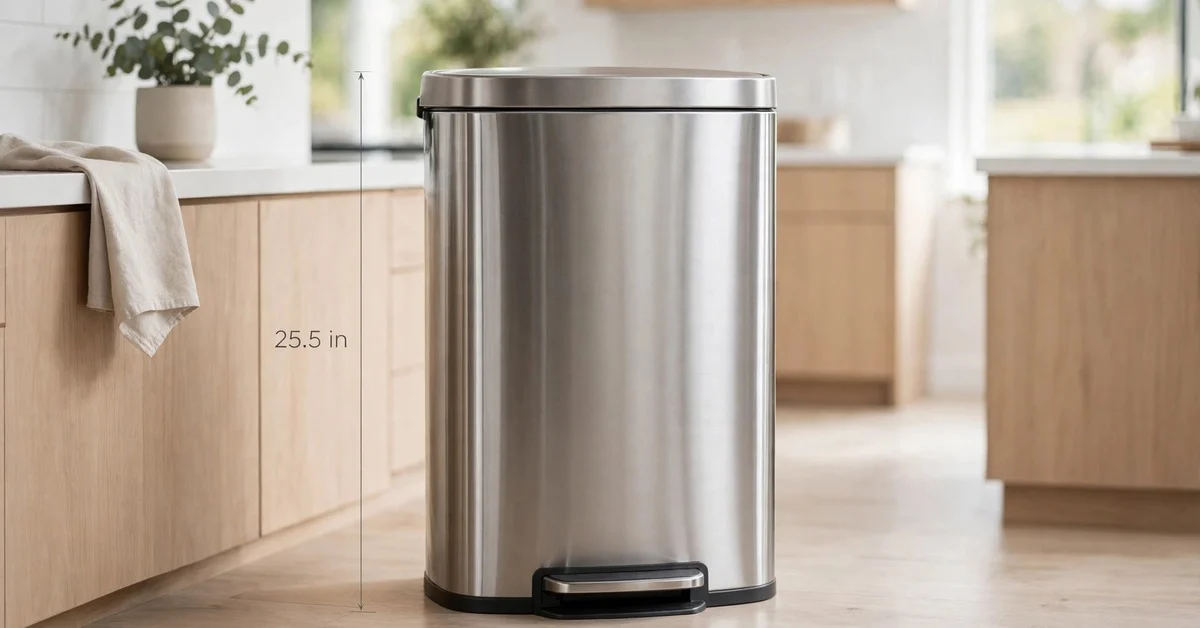
The step-on (pedal) can is the classic 13-gallon kitchen can with a foot pedal that lifts the lid hands-free. Capacity stays at 13 gallons and the bags stay 13-gallon; the pedal mechanism adds an inch or two of height, so plan for roughly 25–26 inches with the lid closed, plus clearance above for the lid swing. Step cans shine in busy kitchens because the lid opens with a foot tap while your hands hold a cutting board or a bag of scraps. The pedal is the moving part that wears out first, so a sturdy steel pedal linkage matters more than a fancy finish. A soft-close lid is worth having — it keeps the lid from slamming when the pedal releases.
4. 13-Gallon Sensor Can
Sensor cans — touchless, motion-sensor, automatic cans — open the lid when your hand passes over an infrared sensor, then close it after a few seconds. The body is still the standard 13-gallon size, and it takes the same 13-gallon bags as any other kitchen can. The sensor housing sits in the lid, so total height runs roughly an inch or two above the ~24-inch body. They are ideal next to a prep counter where hands are messy, and the sealed lid does a good job containing odors between openings. Plan on batteries or a rechargeable pack; a sensor can with a dead battery is just a manual can with a heavier lid.
5. 4-Gallon Bathroom Can
The bathroom standard is the 4-gallon can — small enough to sit beside a vanity or toilet, big enough to hold about a week of tissues, cotton rounds, and packaging. At roughly 13 inches tall, it tucks under most sink cabinets and stays out of the way in tight bathrooms. Use 4-gallon bags, often sold as small bathroom bags; a 13-gallon bag in a 4-gallon can just pools plastic at the bottom. Step-on lids are popular here for hygiene, and a removable inner bucket makes emptying easy. Because bathroom waste is light but frequent, the 4-gallon size hits the sweet spot between emptying too often and letting waste sit too long.
6. 7–10 Gallon Office Can
Offices, craft rooms, and laundry rooms usually land on a 7–10 gallon can — bigger than a bathroom bin, smaller than a kitchen can. This range covers the classic tall office wastebasket, about 17–20 inches high, that sits beside a desk and holds paper, packaging, and lunch waste for several days. Capacity-wise it is roughly half to three-quarters of a kitchen can, and it pairs with 8–10 gallon bags. The 7-gallon end suits a single desk; the 10-gallon end handles a shared home office. Swing-top lids hide paper clutter and keep the look tidy, while an open-top wastebasket is fine for a spot that only collects paper.
7. 10-Gallon Pullout Cabinet Can
An in-cabinet pullout can hides inside a kitchen base cabinet on a sliding frame, keeping the trash out of sight. Most hold roughly 10 gallons in a single bin — a touch under the 13-gallon freestanding standard, traded for the hidden placement. Before buying, measure the cabinet opening’s height, width, and depth; if the fractions get confusing, a refresher on how to read a measuring tape helps. The frame needs an inch or two of clearance on each side to glide. These work best with 10-gallon bags and a can with a bag-holding rim so the bag does not slip down into the cabinet. Empty a little more often than a 13-gallon can, since the smaller capacity fills faster with food scraps.
8. Dual-Compartment Recycling Can
A dual-compartment can splits one body into trash and recycling — typically around 13–16 gallons total, divided into two sections of roughly 6–8 gallons each. It is the simplest way to sort at the source without buying two separate cans. Each side takes its own bag, so size bags to the compartments rather than the total: roughly 8-gallon bags for each side on most models. Heights are similar to a standard kitchen can, around 24–27 inches, and many come as step-on or sensor versions. The trade-off is capacity: each stream holds less than a full-size can, so households that generate a lot of recyclables may still want a second bin. For most kitchens, though, one dual can replaces two singles.
Table 2: Outdoor and specialty trash cans
| # | Trash can | Capacity | Typical height | Bag to use |
|---|---|---|---|---|
| 9 | 32-gallon outdoor can | 32 gal | ~28 in | 32–33 gallon bags |
| 10 | 20-gallon patio can | ~20 gal | ~24 in | 20–30 gallon bags |
| 11 | 10-gallon deck step can | ~10 gal | ~19 in | 10-gallon bags |
| 12 | 13-gallon swing-top kitchen can | 13 gal | ~26–28 in with lid | 13-gallon bags |
| 13 | 8-gallon under-sink can | ~8 gal | ~16–18 in | 8–10 gallon bags |
| 14 | 3-gallon bedroom mini can | ~3 gal | ~12 in | 3–4 gallon bags |
| 15 | 55-gallon utility drum | ~55 gal | ~33–36 in | Contractor bags |
9. 32-Gallon Outdoor Can
The standard outdoor trash can holds 32 gallons — roughly two and a half kitchen cans’ worth of waste in a single body. At about 28 inches tall it lands around knee-to-hip height, and most models are round with a tight-fitting lid that keeps rain and animals out. Wheeled versions with a handle make curb day far easier; the fixed-axle two-wheel design is the norm. Before buying, check that the can will pass through your gate or garage door — measure the opening against the can’s diameter, and compare with standard door sizes if you are unsure of the clearance. Use 32–33 gallon bags, often sold as outdoor or yard bags, which run thicker than kitchen bags to handle heavier loads. One 32-gallon can comfortably serves a week’s household waste.
10. 20-Gallon Patio Can
For patios, decks, and side yards, a 20-gallon can covers the middle ground: bigger than any indoor can, smaller and easier to move than a full 32-gallon outdoor can. It suits grill areas, garden cleanup, and pet waste, and at roughly 24 inches tall it stays below most deck railings. Because 20-gallon bags are less common on shelves, many people line these with 30-gallon bags folded over the rim — bags are sized to the can, but a slightly larger bag still works if the excess is tucked neatly. A locking or weighted lid matters outdoors, where wind is the main enemy. If you already own a 32-gallon can for curb day, a 20-gallon patio can makes a handy staging bin that you empty into the big one.
11. 10-Gallon Deck Step Can
A 10-gallon step can on a deck or balcony keeps outdoor entertaining tidy without committing to a full-size outdoor can. Step-on lids are the natural fit here: they open with a foot, stay closed against the wind, and hide food waste from insects between servings. At roughly 19 inches tall, it sits below most railing sightlines and tucks beside a grill or outdoor table. Standard 10-gallon bags fit; for greasy grill waste, a thicker bag earns its keep. Bring it inside or under cover in harsh weather — step mechanisms last far longer when they are not sitting in the rain.
12. 13-Gallon Swing-Top Kitchen Can
The swing-top (butterfly lid) 13-gallon can is the retro classic: push the lid and it swings inward, then settles back closed. Capacity is the standard 13 gallons with 13-gallon bags, and the inward-swinging lid adds a few inches of height — plan for roughly 26–28 inches overall. Swing tops hide trash completely and need no batteries or pedals, which is why they still sell decades after the design debuted. The downside is the lid’s inner flaps, which catch on tall items and need an occasional wipe. They suit households that want a fully closed look without the moving parts of a step can.
13. 8-Gallon Under-Sink Can
Under the sink is prime real estate, and an 8-gallon can is usually the largest that fits: roughly 16–18 inches tall to clear the plumbing and the cabinet floor. Measure the space first — pipes and garbage disposals eat into the available room fast — and leave a finger’s width of clearance so the can lifts out for emptying. Line it with 8–10 gallon bags; the slightly larger bag gives extra cuff to fold over the rim. This spot collects food-prep scraps, so a lid matters more here than anywhere else in the kitchen. If 8 gallons feels small, remember it is a supplement to the main kitchen can, not a replacement.
14. 3-Gallon Bedroom Mini Can
Bedrooms, nurseries, and dorm rooms do fine with a 3-gallon mini can — about a foot tall, light enough to carry with one finger, and small enough to hide beside a nightstand. It holds tissues, wrappers, and small packaging for days before needing a trip to the main bin. Small 3–4 gallon bags fit; in a pinch, a grocery bag works too. Open-top designs are fine here since bedroom waste rarely smells, though a lidded mini keeps a nursery looking tidy. The real job of a 3-gallon can is convenience: waste lands in the bedroom bin instead of on the floor, and it gets carried to the kitchen can when full.
15. 55-Gallon Utility Drum
The 55-gallon drum is the heavyweight: roughly 33–36 inches tall and built for garage cleanouts, workshops, and yard projects rather than daily kitchen duty. At about four times the capacity of a 13-gallon kitchen can, it swallows bulky waste that would fill a kitchen bag in one go. Steel drums with locking lids also work as animal-proof outdoor storage in rural areas; plastic drums are lighter and will not rust. Line it with heavy contractor bags, and do not try to lift it full — drag it or use a dolly. For most households, a 55-gallon drum is a project bin, not a permanent fixture, and that is exactly how to use it.
Frequently Asked Questions
What size trash bag fits a 13-gallon trash can?
A 13-gallon bag. Bags are sized to the can, so 13-gallon tall kitchen bags — drawstring, flap-tie, or unscented — are cut to line a 13-gallon can with the rim folded over and the ties able to close. Going smaller leaves the bag stretched and prone to tearing; going larger wastes plastic and sags inside the can.
How tall is a 13-gallon kitchen trash can?
About 24 inches tall. Slim models can run a little taller at the same capacity, and step-on or sensor lids add an inch or two above the body, but 24 inches is the standard height to plan around when checking counter or cabinet clearance.
What size trash can is best for a bathroom?
A 4-gallon can. It holds roughly a week of bathroom waste — tissues, cotton pads, packaging — without taking over the limited floor space beside a vanity. Small 4-gallon bags fit it exactly, and a step-on lid keeps things hygienic.
What size trash can should I use outdoors?
A 32-gallon can is the standard outdoor size. It holds several days of household waste in one body, stands up to wind better than smaller cans, and pairs with a tight lid — plus wheels and a handle on most models for easy trips to the curb.
Final Thoughts
Match the can to the room, then the bag to the can, and the whole system runs itself. The 13-gallon kitchen can, at about 24 inches tall, remains the anchor of the house — everything else, from the 4-gallon bathroom bin to the 7–10 gallon office can to the 32-gallon outdoor can, exists to feed waste toward it or carry it to the curb. Buy bags by can size instead of guesswork: 13-gallon bags for 13-gallon cans keeps liners snug and ties closing the way they should. Measure tight spaces before you buy, especially under sinks and inside cabinets, and give lids — step, sensor, or swing — a little extra headroom above the body. Get those basics right and the trash simply disappears into the routine, which is honestly the highest praise any trash can can earn.

I’m Elena Cross, a content writer at MeasuresIt.com, where I turn complex measures, units, and mathematical concepts into clear, accurate, and easy-to-read articles. I’m passionate about precision in numbers and in words and I write to help readers actually understand measurements, not just memorize them.